Studio Apartment Storage: 3 Zones, One Room, Zero Clutter

We research every product we recommend and say so when we have tested it ourselves. If you buy through our links, we may earn a commission.
One room has to do everything in a studio, so give it three jobs: a sleep zone, a work zone, and a storage zone. These three setups use pieces you can move, hang, or roll — nothing drilled, nothing permanent.
1. Give Sleep Its Own Zone
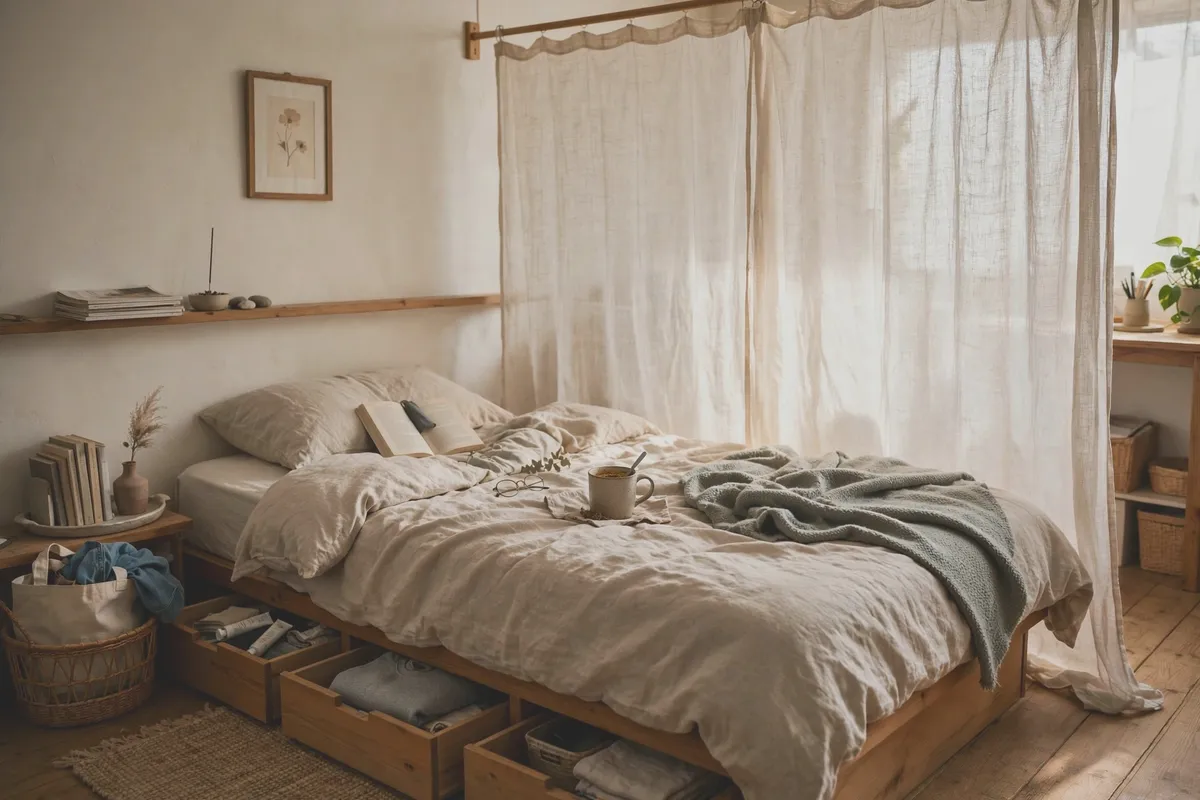
Your bed is the biggest thing in a studio, so make it work twice. Flat bins underneath swallow off-season clothes, extra sheets, and the things you only need monthly — out of sight, still reachable. A simple curtain on a tension rod splits sleep from everything else, which matters more than you'd think: your brain rests better when the bed doesn't stare at your desk. Close the curtain at night and the whole room feels bigger by morning.
Good to know: A tension rod needs two facing walls — measure the span before buying.
2. Stack Your Work Corner Up
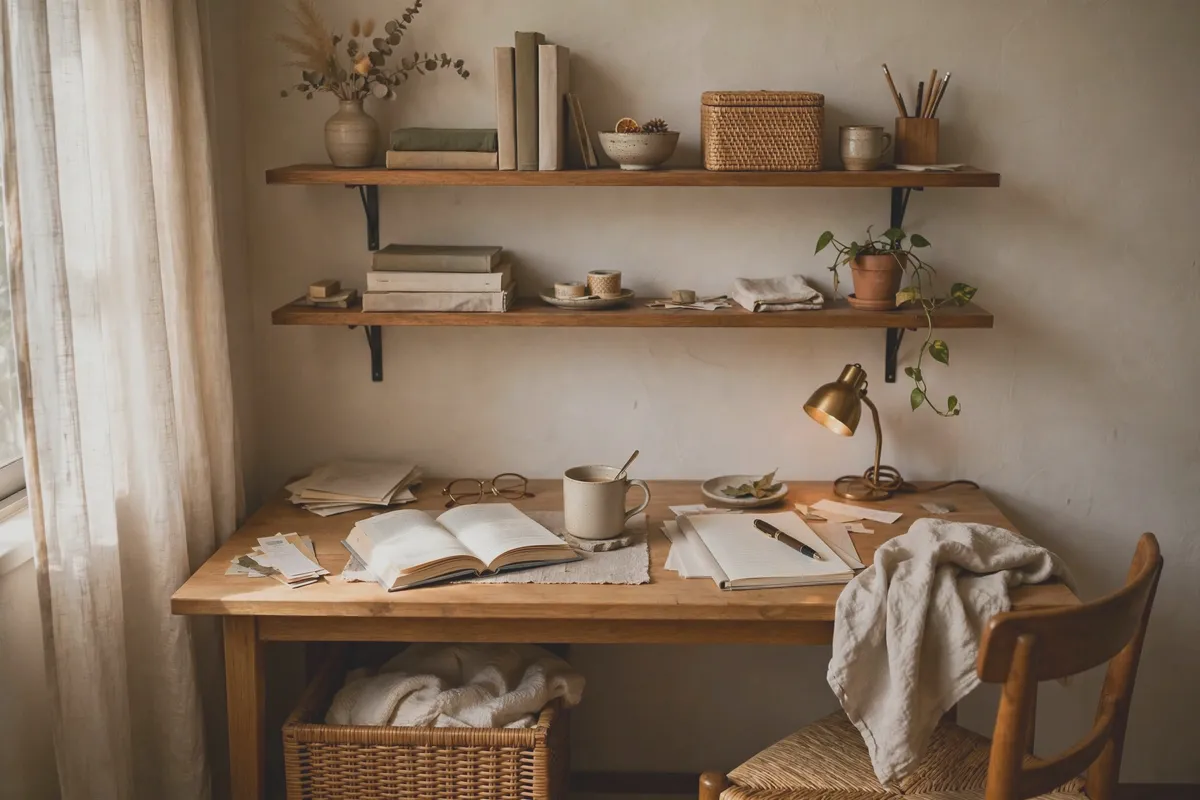
A studio desk has to earn its square footage. Push it against a wall and build upward: two floating shelves on removable brackets hold the printer paper, chargers, and reference books that used to eat the desktop. Keep the surface for the laptop and one task at a time. When work ends, everything has a shelf to return to — the corner flips back to living space in about ninety seconds.
Good to know: Removable bracket shelves hold plenty for office supplies — skip the heavy textbooks.
3. Turn One Wall Into Storage
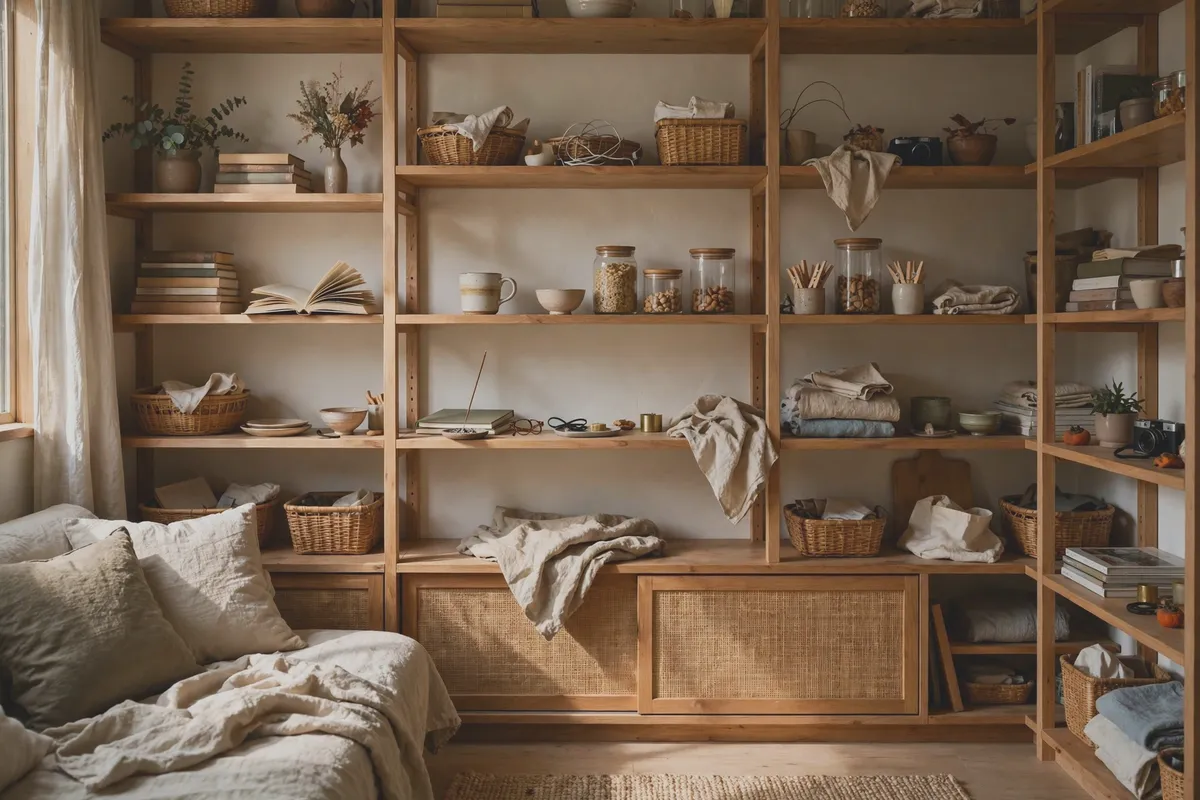
Studios rarely lack space — they lack one place where everything belongs. Dedicate a single wall to open shelving and it becomes the apartment's closet, pantry, and library in one. Mix closed boxes for the ugly stuff with open shelves for books and the pieces you actually like looking at. Freestanding shelf units need no drilling and move with you. One strong wall beats five scattered organizers every time.
Good to know: Anchor tall freestanding units with furniture straps if you have kids or earthquakes.
Three zones, one room, zero excuses. Start with the zone that bugs you most — the rest gets easier once one corner works.